Clinical insight,
Dark fiction
“I spend my days navigating the complexities of the human mind as a psychotherapist. The rest of the time, I translate those intricacies into thrilling fiction. If you’re interested in my work or a potential collaboration, get in touch.”
✉ Get in touch: [email protected]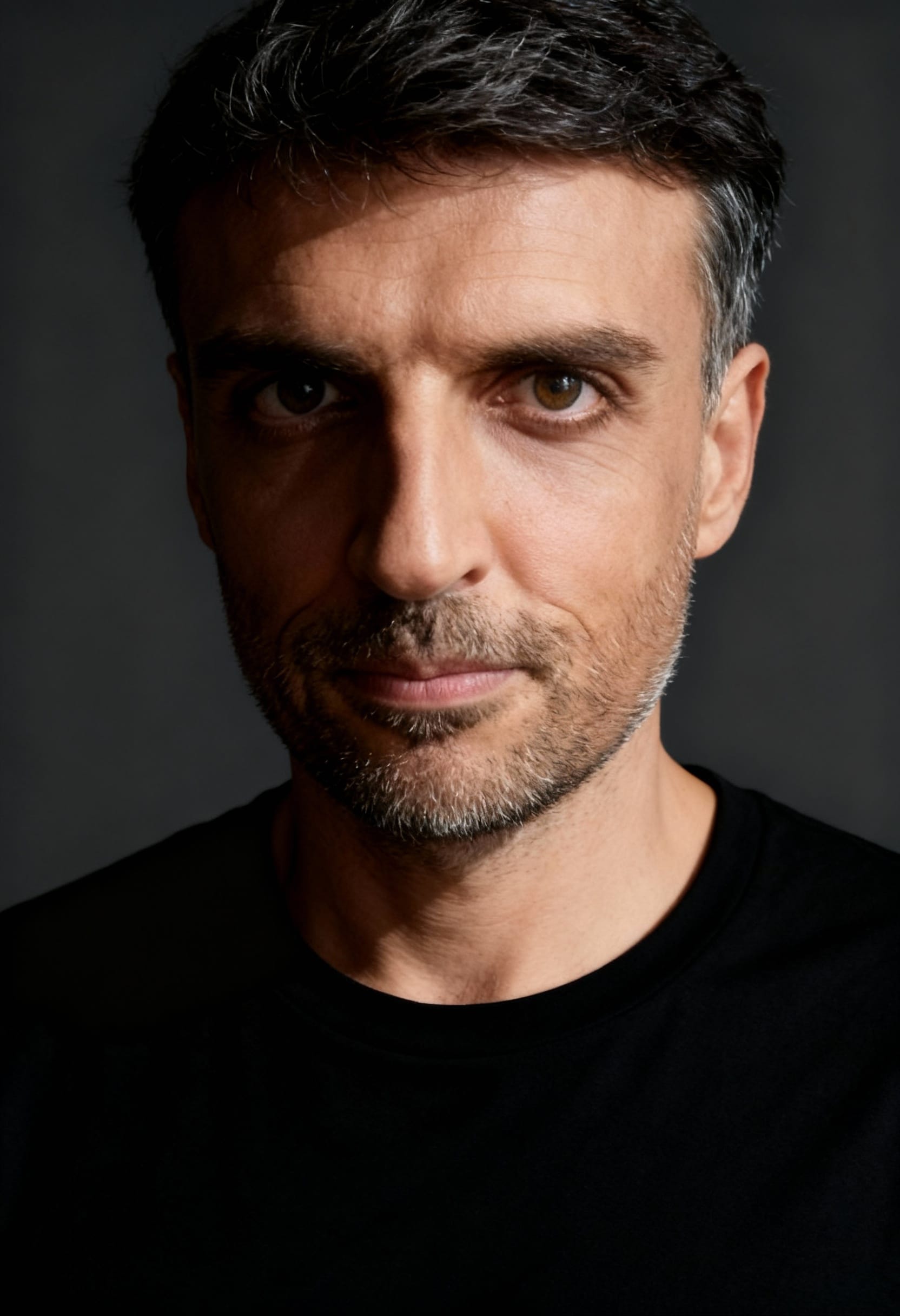
About me.
Working as a therapist is an advantage for a writer of dark fiction, because it gives me a deep well of human experience to draw from. And since my methodology is Applied Strategic Therapy, I would often see clients for just a few sessions, which meant I got to witness a wide variety of human struggles and stories in a condensed timeframe.
But it also comes with challenges. I’ve found that writing about the human psyche can be a double-edged sword: it enriches my storytelling, but it can also blur the lines between my professional and creative lives. I’m always navigating that balance, striving to create compelling narratives while respecting the confidentiality and ethics of my therapeutic work.
I wrote my first story in 1985, right after reading Huckleberry Finn. My nine-year-old brain produced a nearly identical Tom Sawyer character who had an older friend. Original, I know.
At fifteen, I discovered that girls liked boys who played guitar. So I picked one up and wrote a song to impress a girl I had a crush on. It worked. She became my girlfriend. From then on, songwriting was my thing.
The habit stuck.
Somewhere along the way, writing stopped being something I did and became the way I think. I never owned a TV. Never had social media. Writing was how I entertained myself and how I figured things out.
By day, I work as a psychotherapist, which is just another way of listening for what people aren’t saying. The subtext. The hesitation. The careful selection of words. It leaks into the fiction. I’m less invested in what my characters do than in why they can’t help doing it.
During Covid’s lockdowns, I started digging through old boxes. Notebooks dating back to elementary school. Most of it was cringey and best left buried—the kind of prose that seemed like genius at the time. But I also found gems. Tales and tunes I hadn’t thought about in years, their source and impact rushing back the moment I saw them.
Those are the ones I chose to share with you.
My stories are psychological thrillers about the conflicts we carry inside our heads—ordinary people in extraordinary corners, making choices you’ll second-guess long after the last page. My music is emotional, usually written like a soundtrack to a scene that hasn’t been filmed yet. Sometimes a story starts as a melody, or finds one later, which is why an occasional track appears alongside a novella.
I’m a pantser. If I knew ahead of time how the story was going to unfold, I wouldn’t bother writing it. I write to discover the plot and the characters, to be surprised, sidetracked, and moved. I am simultaneously the author and the first reader.
I like tight, propulsive narratives with no place to hide. Minimal furniture. No secret codes or shadowy cabals. Just people, pressure, and the small decisions that change everything.
I grew up before personal computers were affordable, so I still write my first drafts by hand—always on yellow legal pads with a Pilot Gravity pen. I go through about 50 pads a year. Once the story is solid, I dictate it to the computer for the first “official” second draft.
I chose the pen name S. Ulliel—my mother’s maiden name—to keep a boundary between my clinical work and my fiction, while drawing from the same obsession: the strange, skewed logic that drives people at their worst.
Every book I finish leaves behind three I haven’t started. Every song I record makes me hear two more. I’m not sure if that’s a gift or a condition—but I stopped trying to cure it a long time ago.
Thank you for taking the time to enter my world.
—S. Ulliel
Side notes.
In this section I'll do my best to answer questions I get asked a lot, and share bits of psychological insights or thoughts that don't fit anywhere else. If you have a question you'd like answered here, or a topic you'd like me to cover, shoot me an email.
- #116 Why smart people join cults
- #115 Why I Stay Away from Social Media
- #114 Symptoms of a Social Media Addict
- #113 How to Know If You're Being Recruited into a Cult
- #112 Could You Work in Espionage?
- #111 Hannibal Lecter Was Not a Psychopath. Here's How to Recognize a Real One.
- #110 Never Forever: The Song
- #109 The Boy Who Doesn't Miss: An Interview with Caleb
- #108 Why Do People Like Arthur 9 See Patterns in Everything?
- #107 What Is Actually Wrong with Amy Dunne
- #106 Did Ted Bundy Actually Love Elizabeth Kloepfer
- #105 What a Double Life Does to Your Brain After 15 Years
- #104 Jon Hamm's Don Draper Is a Physical Lie
- #103 What Was Actually Going on with Elizabeth Holmes' Voice
- #102 How Harvey Weinstein Manipulated Everyone for So Long
- #101 Why People in Movies Don't Act Like Real Trauma Survivors
- #100 Cillian Murphy's Stillness as Tommy Shelby
- #099 Can a Narcissist Change If They Really Want To?
- #098 Why Movies Always Get Schizophrenia Wrong
- #097 What Real Serial Killers Have That Movie Killers Never Do
- #096 The Real Reason Rufus from Ghost Town Isn't Just an Imaginary Friend
- #095 The Widowmaker: Chapter One
- #094 What the Double Life Does to a Sense of Self
- #093 How Caleb Was Programmed to Be a Marksman
- #092 Is Dexter Morgan Actually Capable of Love?
- #091 Why Bob Odenkirk Walks Like He's About to Be Hit
- #090 What Is Actually Wrong with Tony Soprano
- #089 How Grooming Works from Inside the Dynamic
- #088 Is Gabriel Cohen More Realistic Than Jack Reacher?
- #087 Why OJ Simpson Actually Wrote That Book
- #086 Why OCD Is Not Just Being a Neat Freak Like on TV
- #085 Frank Underwood Is a Parasite Not a Predator
- #084 What a High Functioning Psychopath Actually Looks Like in Real Life
- #083 How Lester Nygaard and Arthur Fleck Are Actually the Same Person
- #082 Rhea Seehorn's Ponytail Tells You Exactly What Kim Is Thinking
- #081 How Tommy Shelby Uses PTSD to Win
- #080 Do Serial Killers Know They're Evil?
- #079 Jack Reacher vs Gabriel Cohen Who Actually Wins
- #078 Patrick Bateman's Morning Routine Is a Clinical Symptom
- #077 Why John Wayne Gacy Didn't Think He Was a Serial Killer
- #076 How to Recognize a Suicide Bomber: A Field Guide for New Recruits
- #075 Why Caleb Is Not a Serial Killer (and What He Actually Is)
- #074 Why Arthur 9 Makes Dexter Morgan Look Like a Cartoon
- #073 Nora: Chapter One
- #072 Nora: A Preface
- #071 Can Someone Fake Insanity Convincingly Like Elijah?
- #070 Bryan Cranston's Breathing as Walter White
- #069 Arthur 9: Chapter One
- #068 Jimmy McGill Is the Mask and Saul Goodman Is the Real Person
- #067 How a Whole Village Enables a Man's Delusion
- #066 What Happens to Your Brain After 15 Years in Hiding
- #065 Arthur 9: A Preface
- #064 A Day You Won't Forget: The Song
- #063 How Gabriel Cohen Survives with That Much Paranoia
- #062 Is Amy Dunne More Dangerous Than Villanelle?
- #061 Why Scott Peterson Didn't Just Get a Divorce
- #060 Tony Soprano's Panic Attacks Are Actually a Weapon
- #059 Who Is More Realistic: Dexter Morgan or Hannibal Lecter?
- #058 Why Walter White Is Not a Narcissist
- #057 Why the Widowmaker Proves Movies Don't Understand Long-Term Liars
- #056 Don Draper Is a Chronic Dissociative
- #055 Do Abusers Know They're Abusing?
- #054 Why Heath Ledger's Joker Is Scarier Than Joaquin Phoenix's
- #053 Why Smart Women Joined Keith Raniere's Cult
- #052 The One Thing Movie Villains Always Get Wrong About Manipulation
- #051 Why Sawyer from Lost Never Looks Anyone in the Eye
- #050 Is Dexter Morgan Actually a Psychopath
- #049 What a Real Panic Attack Looks Like (It's Not Just Breathing into a Bag)
- #048 Is Rufus from Ghost Town Real or Just in Her Head
- #047 What Really Happened in the Menendez Brothers' House
- #046 Is Rust Cohle Actually More Unstable Than Will Graham?
- #045 Is Anna Delvey Actually a Narcissist
- #044 Mads Mikkelsen's Hannibal Is a Predator Anthony Hopkins's Is a God
- #043 Why the Tinder Swindler Was Not a Psychopath
- #042 How Compartmentalization Actually Works in the Brain
- #041 What Bernie Madoff Was Doing When He Wasn't Stealing
- #040 How a Person Gradually Erases Their Own Empathy
- #039 Why Nora Robbed That Bank Without a Plan
- #038 Why Rust Cohle Smokes Like He's Trying to Disappear
- #037 Why an Imaginary Friend Might Be a Real Protector
- #036 Why Walter White Is Not a Narcissist
- #035 Jodie Comer's Accent Changes Are Actually a Trauma Response
- #034 Could a Real Mossad Agent Be as Paranoid as Gabriel Cohen?
- #033 Why Gabriel Cohen Is More Than Just Paranoid
- #032 The Way James Gandolfini Eats as Tony Soprano
- #031 Did Tony Soprano or Walter White Have a Worse Personality Disorder?
- #030 Why Dolores Umbridge Is Scarier Than Nurse Ratched
- #029 The Tinder Swindler Was Not a Psychopath
- #028 Michael C Hall's Blank Stare as Dexter Morgan
- #027 Why Frank Abagnale Had to Keep Making Things Up
- #026 Is Gabriel Cohen More Dangerous Because He's Paranoid?
- #025 What Nora Was Actually Looking for When She Took the Money
- #024 Did Elijah Actually Know He Was Insane
- #023 How to Spot a Real Sociopath (It's Not the Stare)
- #022 Villanelle Is Not a Killer She's a Bored Child
- #021 The Cost of Maintaining a False Identity Day by Day
- #020 How BTK Lived a Normal Life for 30 Years
- #019 Is Arthur 9's Math System Actually Crazy
- #018 What Does a Real Manipulator Look Like
- #017 Why an Entire Village Would Lie for a Man Like Marco
- #016 Why Nora Is a More Realistic Criminal Than Lisbeth Salander
- #015 Raymond Reddington's Real Identity Is a Martyr
- #014 How an Obsession Becomes a System Like Arthur 9
- #013 How Paranoia Works from the Inside
- #012 Why Arthur 9's Threat Assessment Is So Scary
- #011 How Someone Becomes Capable of Killing Without Realizing It
- #010 What Dissociation Actually Feels Like (It's Not Split Personalities)
- #009 Why Elijah Is More Terrifying Than Hannibal Lecter
- #008 Hannibal Lecter Would Never Be Caught in Real Life
- #007 Is Homeland's Carrie Mathison Actually How Bipolar Works?
- #006 Why Joe Goldberg Thinks He's the Hero of a Movie
- #005 Is Joe Goldberg Just a Modern Patrick Bateman?
- #004 How a Delusion Recruits Reality to Confirm Itself
- #003 Which Joker Is Actually More Mentally Ill?
- #002 How Cancer Changes Your Brain Chemistry and Your Behavior
- #001 Creating Art With My Everbook
No note matches that word. Yet.