Arthur 9: A Preface.
The preface chapter from the psychological thriller book Arthur 9.
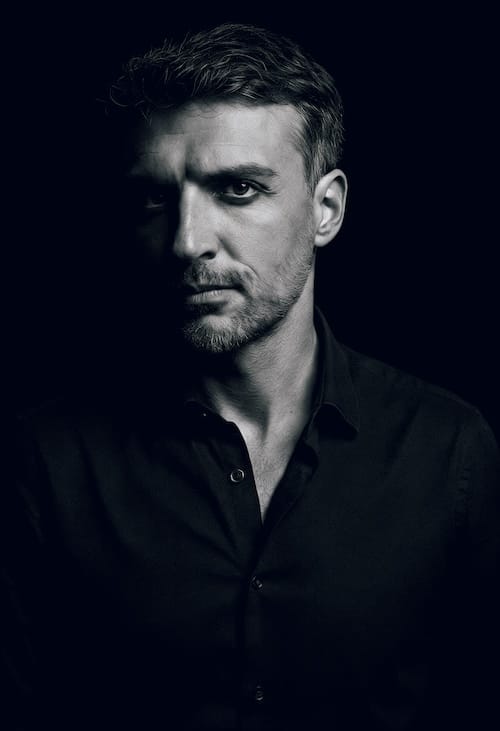
Prague, 2014. The winter air froze into a thick, grey haze by five in the morning. I spent those hours at my window, watching the city wake up, but my focus always pulled to the flat directly across from mine. He lived on a higher floor, a man who existed in a state of permanent, solitary observation. Even in the teeth of a Czech winter, he stood by his glass, braced against the world outside.
He used ivory theater binoculars to inspect the street. They were delicate things, the kind of fine-tuned optics high-society patrons use at the ballet to see the tension in a dancer’s calf or the bead of sweat on a brow. He didn’t use them for art. He used them to audit the pavement. He tracked the pedestrians, the delivery trucks, and the rhythmic cycle of the street-lamps with a mechanical, unblinking intensity.
His voice carried across the narrow gap between our buildings. It arrived as a dry, percussive tumble of numbers. He muttered calculations and numerological predictions out loud, a relentless stream of math that seemed to dictate the physics of his day. To a casual observer, he sounded like a man lost to a rambling mind. To a psychotherapist, he sounded like a man building a structural defense. I heard the rigid architecture of his logic. I recognized the way he used those digits to anchor himself, as if a decimal point could stop a catastrophe.
Arthur Penhaligon arrived during those cold Prague mornings. I began to write, stripped of abstractions and focused on the raw friction of a life lived through a lens. I wanted to capture the specific resonance of a mind that treats a cul-de-sac as a high-stakes ledger.
Arthur emerged from that neighbor—the loner with the theater glasses who believed that if he just counted the variables correctly, the world would finally make sense.
— S. Ulliel
Prague, 2026