Cillian Murphy's Stillness as Tommy Shelby.
Cillian Murphy's stillness as Tommy Shelby is predatory energy conservation, the same economy a former operative's body learns in a threat environment.
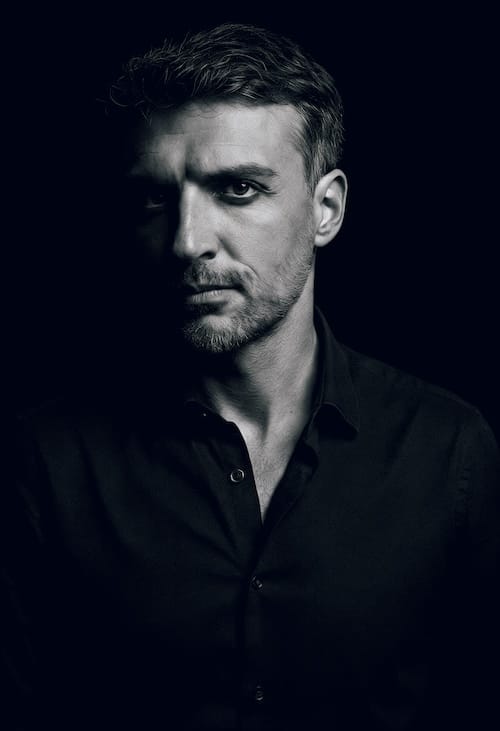
The short version
Cillian Murphy’s stillness as Tommy Shelby is the single most important choice in Peaky Blinders, and it works because it copies how an apex predator conserves energy. Murphy strips out the micro-movements that signal agreeableness and attention, so the body stays quiet and the processing power stays free. He drops Tommy’s blink rate to four or five a minute in critical scenes, which reads as wrong before a viewer can name why. People who spent years in threat environments develop the same suppressed blink and the same economy of motion. The control is the performance, and the full body that never spills is the threat.
- Tommy’s stillness is resource management, the way a crocodile sits motionless to keep every calorie available for the strike.
- Murphy cuts the blink rate to four or five per minute, and a face that does not blink registers as outside normal human range.
- People trained in military, intelligence and certain law enforcement work develop suppressed blinking, because closing the eyes means losing visual input.
- Gabriel Cohen in A Day You Won’t Forget carries the same body, built by a career in intelligence rather than war.
Cillian Murphy barely blinks as Tommy Shelby. This is the single most important acting choice in Peaky Blinders, and most people register it without knowing they’ve registered it. The cillian murphy tommy shelby acting conversation usually circles the cheekbones, the voice, the cigarette work. Those are surface details. The stillness is the whole character. Murphy built Tommy’s entire physical presence around the principle that unnecessary movement is a tactical liability, and every frame of the performance reflects that discipline.
Watch Murphy in a negotiation scene. His hands don’t move. His weight stays centered. His head turns slowly, if it turns at all. His eyes do the scanning that his body refuses to do. When another actor is talking, Murphy’s Tommy doesn’t nod, doesn’t shift, doesn’t offer the small social movements that signal engagement. He just watches. The other characters in the room are performing a conversation. Tommy is performing surveillance.
This maps directly onto predatory energy conservation. Apex predators don’t fidget. A crocodile at the water’s edge sits motionless for hours because every calorie spent on unnecessary movement is a calorie unavailable for the strike. The stillness looks like patience from outside. From inside, it’s resource management. The animal is running constant calculations about distance, timing and angle of attack. The body stays quiet so the processing power stays available.
Murphy plays Tommy with the same economy. The physical budget is finite, and Tommy spends none of it on social performance. Most people burn enormous energy on micro-movements that communicate agreeableness, attention and emotional availability. Tommy refuses. Murphy strips all of that out and leaves only the movements that serve a purpose: reading the room, tracking hands, watching exits.
The blink rate is where Murphy’s precision gets clinical.
The average person blinks fifteen to twenty times per minute. Under stress, the rate increases. In social bonding situations, blink rates synchronize between speakers. Blinking serves a social function beyond lubrication. It signals processing, agreement, shared timing. Murphy reduces Tommy’s blink rate to something closer to four or five per minute during critical scenes. The effect is disorienting for the other actors and for the audience. A face that doesn’t blink registers as something outside normal human parameters. The viewer feels the wrongness before they can name it.
I’ve worked with people who present this way in clinical settings. A person who has spent years in professional threat environments, military, intelligence, certain corners of law enforcement, often develops a suppressed blink rate during conversation. The mechanism is straightforward. Blinking means closing your eyes. Closing your eyes means losing visual input. In an environment where a quarter-second of lost visual data could mean missing a weapon draw or a micro-expression that signals betrayal, the nervous system learns to keep the eyes open. The blink suppression becomes automatic. These people walk into a therapist’s office years later and their blink rate still drops when the conversation gets serious. The body remembers what the mind has filed away.
Murphy either researched this or arrived at it through instinct. Either way, the result is accurate. Tommy’s reduced blinking makes every scene feel like an interrogation, even when the content is mundane. A conversation about horse racing or a whiskey shipment carries the tension of a standoff because Murphy’s eyes never release the other person. The gaze is constant. The other actor has nowhere to hide.
The stillness extends to Tommy’s walk. Murphy moves through rooms with minimal upper body motion. His stride is even. His arms stay close to his body. There’s no swagger, no performance of toughness, no physical display. The walk is efficient in the way a person walks through a space they’ve already assessed. Tommy doesn’t need to project danger because projecting danger requires energy, and energy spent on projection is energy unavailable for action. The most dangerous people I’ve encountered in clinical work shared this quality. They moved less than everyone around them. The room adjusted to their stillness. They never adjusted to the room.
Gabriel Cohen, in A Day You Won’t Forget, operates with the same physical logic. Gabriel spent decades in intelligence work, and his body carries the training the way Tommy’s carries the war. Gabriel speaks eleven languages and reads micro-expressions the way most people read road signs, automatically, without deciding to. His economy of movement comes from the same source as Tommy’s. Unnecessary motion draws attention. Attention creates exposure. Exposure gets people killed. Gabriel sits in rooms the way Murphy sits in scenes: still, absorbing everything and giving nothing back. The calm reads as composure to civilians. To anyone who has worked in those environments, it reads as a system running at maximum processing speed with all available resources routed to intake.
Tommy and Gabriel arrived at the same body through different paths. Tommy came through the trenches. Gabriel came through a career spent cataloging the patterns that keep operations alive or get operatives killed. Both men learned that the body is a broadcast system and that every movement transmits data. Both men decided to go quiet. The silence isn’t peace. The silence is a man who has turned off his transmitter and left only the receiver running.
Murphy understood this. He plays Tommy as a man whose stillness is the most active thing about him. Every scene where Tommy sits motionless in a chair while chaos unfolds around him is a scene where Murphy is doing more physical acting than the people throwing punches and overturning tables. The work is in what the body refuses to do. The control is the performance.
Most actors playing dangerous men go loud. They widen their stance, drop their voice, use space. Murphy went the other direction. He made Tommy smaller and more contained. He reduced the physical output to almost nothing. And that nothing became the most threatening presence on television for six seasons, because the audience could feel the energy that had nowhere to go. The stillness was pressure. The body was full. Murphy never let it spill.
Common questions
Why is Cillian Murphy’s stillness as Tommy Shelby such a strong acting choice?
Because the stillness is the whole character, not a surface detail. Murphy built Tommy around the rule that unnecessary movement is a tactical liability. He removed the micro-movements most people use to signal engagement, so every quiet frame reads as pressure with nowhere to go.
Why does Murphy lower Tommy Shelby’s blink rate?
The average person blinks fifteen to twenty times a minute, and Murphy drops Tommy to roughly four or five during critical scenes. Blinking signals processing and shared timing, so a face that refuses to blink reads as outside normal human range. The viewer feels the wrongness before naming it.
Do real people develop a suppressed blink rate?
Yes. People who spend years in threat environments such as military, intelligence and certain law enforcement work often blink less during conversation. Closing the eyes means losing a quarter-second of visual input, so the nervous system learns to keep them open, and the habit stays automatic long after.
How is Tommy Shelby like Gabriel Cohen?
Both men arrived at the same economical body through different routes. Tommy came through the trenches and Gabriel came through a career in intelligence in A Day You Won’t Forget. Each learned that motion transmits data, so each went quiet, keeping the receiver running while the transmitter stays off.