Jack Reacher vs Gabriel Cohen Who Actually Wins.
Reacher wins every fight because he's bigger and stronger. Gabriel Cohen wins every confrontation because by the time Reacher shows up, Cohen has already changed the room.
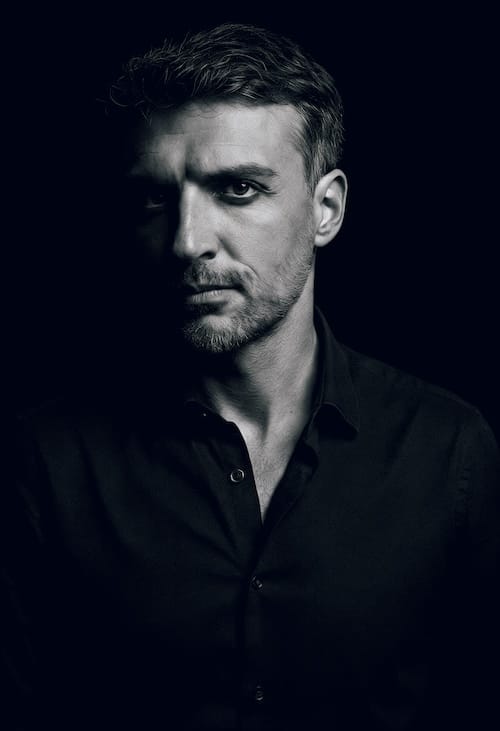
The short version
Reacher wins the fight. Gabriel Cohen wins the encounter, because he makes sure there is no fight. In a symmetrical contest of bodies, Reacher wins in forty seconds, and Gabriel knows it. So Gabriel never lets it become symmetrical. His paranoia compulsively predicts and maps a room hours or days before he enters it, identifying exits, sight lines and the objects that change a confrontation’s geometry. By the time an adversary walks in, Gabriel has already rebuilt the space as an operational map. This is asymmetric warfare. The weaker side does not fight on the chosen battlefield. It changes the terms.
- Reacher enters rooms and assesses them in real time. He is an excellent reactor, but a reactor.
- Gabriel is a pre-emptor. He processed the room six hours ago when he drove past at forty miles an hour.
- Reacher’s advantage is in his skeleton and degrades with age. Gabriel’s is cognitive, and pattern recognition sharpens with experience.
- A sixty-year-old Gabriel is more dangerous than his younger self. A sixty-year-old Reacher is a big man who is slower than he used to be.
Gabriel Cohen vs. Reacher is a question people ask after they’ve read both characters, and the answer they expect is Reacher. Of course Reacher. The man is six-foot-five, two hundred and fifty pounds, built like a shipping container with fists. He has killed dozens of people across twenty-plus novels. He once broke a man’s neck with one hand. Gabriel Cohen is a former Mossad archivist who has panic responses in coffee shops and can’t sleep through the night. On paper this isn’t a contest.
On paper is where Reacher always wins. Off paper is where Gabriel Cohen lives.
The mistake people make is framing this as a fight. A fight is symmetrical. Two people, same room, same moment, each trying to do damage to the other. In a fight, Reacher wins. He wins in forty seconds. He probably wins in twenty. Gabriel is not a fighter. His body is ordinary. His reflexes are ordinary. He has no combat training worth comparing to a former Military Police major who has been in more physical altercations than most people have had hot meals.
If Gabriel Cohen ever lets it become a fight, he loses. Gabriel Cohen knows this. And that knowledge is the entire point.
Gabriel’s paranoia, the same paranoia that ruins his sleep and burns through his relationships and keeps him cataloguing threats in A Day You Won’t Forget, produces one operational advantage that Reacher does not have: Gabriel has already been in the room. Not physically. Cognitively. Gabriel has mapped the space before he enters it. He has identified the exits, the sight lines, the positions where a large man would naturally stand, the objects within reach that could change a confrontation’s geometry. Gabriel has done this work because his mind will not let him not do it. The scanning is compulsive. The threat assessment runs in his body like a second heartbeat.
Reacher assesses environments too. Lee Child writes this often. Reacher walks into a diner and clocks the exits, notes the number of people, evaluates who might be a problem. Reacher is good at this. He is also doing it in real time, in the moment, as he enters. He is reactive. A fast reactor, an excellent reactor, but a reactor.
Gabriel is not a reactor. Gabriel is a pre-emptor. The paranoia means Gabriel processed that diner six hours ago when he drove past it at forty miles an hour. He noted the parking lot’s line of sight from the road. He counted windows. He registered the angle of the front door relative to the counter. He filed this data the way other people file the location of their car keys. Automatically. Without deciding to. By the time Gabriel walks through that door, if he walks through that door, the room has already been disassembled in his head and rebuilt as an operational map.
Reacher enters rooms. Gabriel redesigns them.
This distinction maps onto a concept the military calls asymmetric warfare. When one side cannot match the other in direct force, the weaker side changes the terms. You don’t fight the bigger army on the battlefield they chose. You choose a different battlefield. You arrive first. You alter the conditions. You make the encounter happen on ground that neutralizes the advantages the stronger side brought.
Gabriel Cohen’s entire operational psychology runs on this principle. He cannot match Reacher in size, speed, hand-to-hand skill or pain tolerance. He can match him, and likely exceed him, in environmental preparation. Gabriel’s eleven languages mean he can decode conversations around him in real time, pulling intelligence from ambient noise that Reacher would register as background chatter. Gabriel’s micro-expression training means he reads intent before it becomes action. He sees the decision to move in someone’s face before the person’s body carries out the instruction. In a direct confrontation, this buys Gabriel fractions of a second. In a prepared environment, it buys him everything.
Caleb from The Marksman operates on similar logic. Caleb’s advantage is not close-quarters combat. Caleb’s advantage is distance. He controls the engagement by choosing its range. At two hundred meters with a rifle, Caleb can neutralize a target before the target knows Caleb exists. Remove the distance and Caleb is a young man of average build who grew up in rural poverty. The distance is the weapon. The rifle is just the delivery system.
Gabriel’s version of distance is time. Not physical space. Temporal space. Gabriel processes environments hours or days before he encounters them operationally. By the time an adversary enters the same space, Gabriel has already run the scenario tree. He knows where the chokepoints are. He knows which positions offer cover and which positions feel safe and aren’t. He knows what the room sounds like when the back door opens because he listened to it yesterday.
Reacher has never needed to do this because Reacher has never needed to compensate for a physical disadvantage. Reacher’s body is his preparation. He carries his advantage in his skeleton. Gabriel’s body is a liability, and he has spent twenty years building systems that make the body irrelevant to the outcome.
I’ve worked with enough former operatives to know which approach survives contact with reality. The physically dominant ones, the ones who relied on size and aggression and combat training, aged out of effectiveness. Bodies break down. Injuries accumulate. Reaction time degrades. A man who depends on being bigger and faster has an expiration date.
The intelligence operatives, the planners, the ones who processed environments before entering them, stayed dangerous much longer. Their advantage was cognitive. Pattern recognition does not fade with age the way fast-twitch muscle fiber does. Environmental mapping gets better with experience. A sixty-year-old Gabriel Cohen is more dangerous than a thirty-year-old Gabriel Cohen because he has thirty additional years of environments filed in his head, thirty years of pattern data feeding the analysis that converts paranoia into procedure.
A sixty-year-old Reacher is just a big man who is slower than he used to be.
The real answer to who wins is the answer that applies to most asymmetric conflicts: the prepared mind beats the prepared body, as long as the prepared mind never lets the encounter become a contest of bodies. Gabriel Cohen would never stand in a room and trade punches with Jack Reacher. Gabriel Cohen would make sure the room was his before Reacher ever opened the door. And Reacher, walking in with his usual confidence, reading the space in real time the way he always does, would find that the geometry had already been arranged by someone who was there first, thought it through longer, and left nothing to reaction time.
Reacher wins fights. Gabriel Cohen makes sure there is no fight to win.
Common questions
Jack Reacher vs Gabriel Cohen, who actually wins?
Reacher wins any straight fight, in about forty seconds. Gabriel wins the encounter by refusing to let it become a fight. He arranges the room and the conditions before Reacher arrives, so the contest never happens on the symmetrical terms where size and combat skill decide it.
Why doesn’t Gabriel Cohen just fight Reacher?
Because he would lose, and he knows it. Gabriel’s body is ordinary and he has no combat training worth comparing to a former Military Police major. His advantage is preparation, so he changes the terms of the encounter rather than trading punches he cannot win.
What is asymmetric warfare in this comparison?
It is the weaker side changing the battlefield instead of meeting the stronger side head-on. Gabriel cannot match Reacher in force, so he arrives first, maps the space and alters the conditions. His version of distance is time. He processes an environment hours or days before anyone else enters it.
Who wins as they get older?
Gabriel, by a growing margin. His advantage is cognitive, and pattern recognition and environmental mapping improve with experience. Reacher’s advantage lives in his body, which breaks down. A sixty-year-old Gabriel has thirty more years of filed environments. A sixty-year-old Reacher is just slower.