Jon Hamm's Don Draper Is a Physical Lie.
Jon Hamm plays Don Draper from the skeleton out, and the skeleton is lying. A clinician reads the squared shoulders and locked jaw as somatic armoring over a collapsed interior.
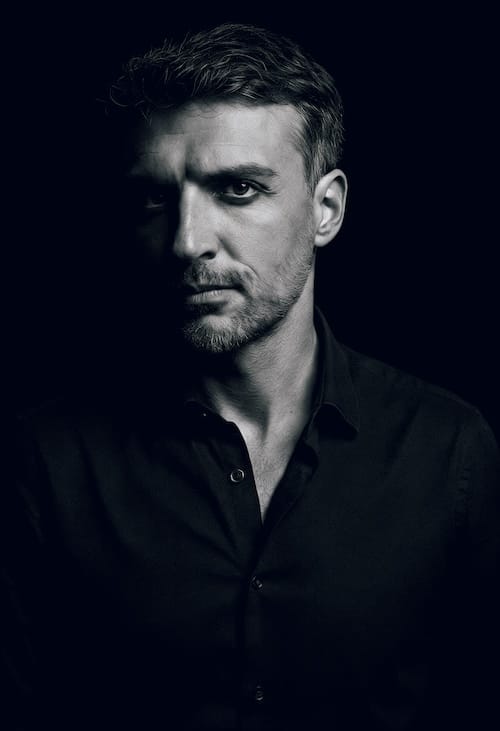
The short version
Jon Hamm builds Don Draper as a physical lie told from the skeleton out. The performance lives in the body, not the voice. Hamm holds Don’s shoulders squared and locked in every scene, a load-bearing brace that requires continuous muscular effort, because the interior has collapsed and the body took over the job of containment. Wilhelm Reich called this somatic armoring. The grooming and the rigid posture form a perimeter so Dick Whitman cannot be seen. The discipline holds even as Don ages, which is the tell that it stopped being a choice.
- Confidence moves. Don does not. He rotates from the waist like a man in a back brace and lowers into chairs in one controlled descent.
- The drunk scenes are where the armor drops, the spine curves and Dick Whitman surfaces through posture rather than confession.
- Hamm ages Don’s face across seven seasons without aging the armor, proving the body cannot stop because collapse is not permitted.
- The protagonist of The Widowmaker runs the same compensation through daily labor and a reliable routine, a body doing the work the mind abandoned.
Jon Hamm don draper performance analysis tends to focus on the voice and the silence between lines. All of that matters. None of it is the main event. The main event is the body. Hamm plays Don Draper from the skeleton out, and the skeleton is lying.
Watch Don Draper walk into a room. The shoulders sit squared and locked, pulled slightly back, held in a position that requires continuous muscular effort to maintain. The chin stays level. The arms swing from the elbows, never the shoulders, because the shoulders are not available for movement. They are load-bearing walls. Hamm holds them that way in every scene, every season, with a consistency that goes past acting discipline into something closer to physical compulsion. Don Draper’s upper body is a structure built to contain something that would be visible if the structure relaxed.
This is not confidence. Confidence moves. A person who is comfortable in their body shifts weight, drops a shoulder, turns with their hips instead of their whole torso. Hamm gives Don none of this. Don Draper rotates from the waist like a man wearing a back brace. He sits down by lowering himself in a single controlled descent, spine vertical, and the chair receives him like it’s been warned. Every physical transition is managed. Every gesture is budgeted. The body is on a leash, and the leash is short.
I’ve worked with clients whose bodies do this. The clinical term is somatic armoring, and Wilhelm Reich described it decades before anyone put Don Draper in a grey flannel suit. A person living under sustained psychological threat develops a muscular holding pattern that functions as a second skin. The muscles of the chest and shoulders lock into a permanent brace position. The jaw follows. The purpose is containment. The interior is destabilized, fractured, running on fumes. The exterior compensates. The body does the work that the psychology can no longer handle, and it does this work twenty-four hours a day, without permission, without conscious direction. The person doesn’t decide to hold their shoulders up. The shoulders go up and stay up because the alternative is collapse, and collapse is not an option the nervous system will permit.
Hamm understood this. He plays Don’s body as the thing propping up a collapsed interior.
The grooming tells the same story. Don Draper’s hair is never out of place. His tie knot sits centered. His shirt collar lies flat against his neck with the precision of something measured. Hamm maintains this surface perfection with a physical stillness that borders on eerie. Other characters on Mad Men fidget, adjust, scratch their necks, pull at their cuffs. Don doesn’t. Don is a man who checked his reflection before leaving the house and has been holding that reflection in place ever since through sheer muscular discipline.
People read this as vanity. It’s control. Don Draper grooms the way a combat veteran makes his bed. The ritual serves a containment function. If the surface is perfect, the surface can be trusted. If the surface can be trusted, nobody looks deeper. Hamm plays the grooming as a perimeter. Everything inside the suit and the hairline and the clean jaw is Dick Whitman, and Dick Whitman cannot be seen.
The moments where the physical discipline breaks are the moments where Hamm earns his place among the best actors of his generation. Watch Don’s body when he’s drunk. The shoulders drop. The spine curves forward. The jaw loosens and the mouth opens slightly, losing the sealed quality it carries in every sober scene. Drunk Don Draper is a man whose containment system has been chemically disabled. Dick Whitman doesn’t surface through memories or confessions. Dick Whitman surfaces through posture. The body that held itself rigid for fourteen hours finally lets go, and what appears underneath is a man shaped differently than the one the office sees. Smaller. Rounder in the shoulders. Less certain about where his center of gravity is.
Hamm makes the drunk scenes register as a different body living inside the same skin. That is the performance.
The parallel I keep coming back to is the protagonist of The Widowmaker. A timber contractor in the Pacific Northwest, 1980s, operating under a stolen identity for fifteen years. His community knows him as honest and reliable. His handshake means something. His daily routine, the early mornings and the physical labor, functions the same way Hamm’s squared shoulders function for Don Draper. The routine is the armor. The discipline is compensatory. Both men maintain a physical presentation so consistent that the people around them read it as character. As evidence of a solid man.
The consistency is the lie.
A person with nothing to hide can afford to be inconsistent. They can have a bad day that shows on their face, walk into a room without composing themselves first, sit in a chair without lowering themselves into it like a controlled demolition. Don Draper can’t afford any of that. The Widowmaker’s protagonist can’t either. Both men’s physical discipline exists because the interior has already collapsed, and the body stepped in to do the job the mind abandoned. The squared shoulders, the perfect grooming, the reliable daily patterns: all of it is compensation. The compensation is so total, so well maintained, that it has become the person. The performance has eaten the performer.
Hamm does something across seven seasons that I don’t think gets enough attention. He ages Don Draper’s body without aging Don Draper’s armor. By the final season, the face is heavier, the eyes are more tired, the skin shows wear. The posture doesn’t change. The shoulders are still locked. The spine is still vertical. The physical discipline holds even as the body carrying it deteriorates. This is the tell. A man who was performing confidence would eventually tire of the performance. A man whose body has taken over the job of psychological survival cannot stop performing, because the performance is no longer a choice. It is a structural necessity. The body will maintain the armor until the body itself fails. Hamm plays this with an endurance that makes the final season physically uncomfortable to watch. Don Draper is a building that is still standing only because no one has told the walls they’re allowed to fall.
The jon hamm don draper performance conversation needs to start with the body. The voice, the timing, the silences, the ad pitches, all of it sits on top of a physical choice that Hamm made in the pilot and held for seven years. Don Draper’s body is a lie told by every muscle from the jaw to the ankles, told so consistently and for so long that the lie became the truth and the truth became something sealed inside the walls, pressing outward against a frame that will not give.
Common questions
What does Jon Hamm do with his body to play Don Draper?
Hamm holds Don’s shoulders squared, locked and pulled slightly back in every scene, a position that takes continuous muscular effort. He rotates from the waist, sits in single controlled descents and never lets the upper body relax. The body is on a short leash, and the leash is the performance.
What is somatic armoring?
Somatic armoring is a muscular holding pattern that forms under sustained psychological threat. Wilhelm Reich described it. The chest, shoulders and jaw lock into a permanent brace that functions as a second skin. The purpose is containment. The body does the work the destabilized interior can no longer handle, and it runs around the clock without conscious direction.
Why does Don Draper’s grooming matter?
The grooming is control, not vanity. Don keeps his hair, tie and collar perfect through sheer stillness, the way a combat veteran makes his bed. The ritual is a perimeter. If the surface can be trusted, nobody looks deeper, and Dick Whitman stays sealed inside the suit.
When does Don Draper’s armor break?
The armor breaks when Don is drunk. The shoulders drop, the spine curves forward and the jaw loosens. Dick Whitman surfaces through posture, a smaller and rounder man living inside the same skin. Hamm plays it as a different body, which is the heart of the performance.