Michael C Hall's Blank Stare as Dexter Morgan.
Michael C. Hall plays Dexter Morgan with a face that gives nothing away. A psychotherapist explains why that blankness is the most clinically precise acting choice in the show, and what it reveals about learned emotional suppression.
The short version
Michael C. Hall’s blank stare as Dexter is the most clinically accurate choice in the show, and it reads as learned emotional suppression rather than psychopathy. Hall plays a man whose face was trained out of him. Facial mirroring is the first language an infant learns, and when a child sits in his mother’s blood for two days and is then taught by Harry to fake normalcy, the mirroring circuits go quiet. So Dexter’s face does not express. It performs expression, a beat late, manufactured rather than mirrored. The breaks that crack through are the proof that the system underneath is still alive.
- The blankness looks like coldness, which is what the show wants, but it is a face disconnected from the emotional processing system.
- Harry gave Dexter a manual for faking expression and the manual does not cover involuntary feeling, so the breaks are involuntary.
- Hall calibrates the breaks by relationship. Frequent around Rita and Debra, almost total around Miami Metro colleagues.
- Hall made Dexter’s face soft and settled, not tense, because genuine long-term suppression looks like release from duty, not effort.
Michael C. Hall plays Dexter Morgan with a face that refuses to move. The michael c hall dexter acting conversation usually fixates on his voiceover, that flat narration that walks the audience through each kill. The voiceover is good. The face is better. Hall put Dexter’s entire emotional life into what his face doesn’t do, and that blankness is the most clinically accurate thing in the show.
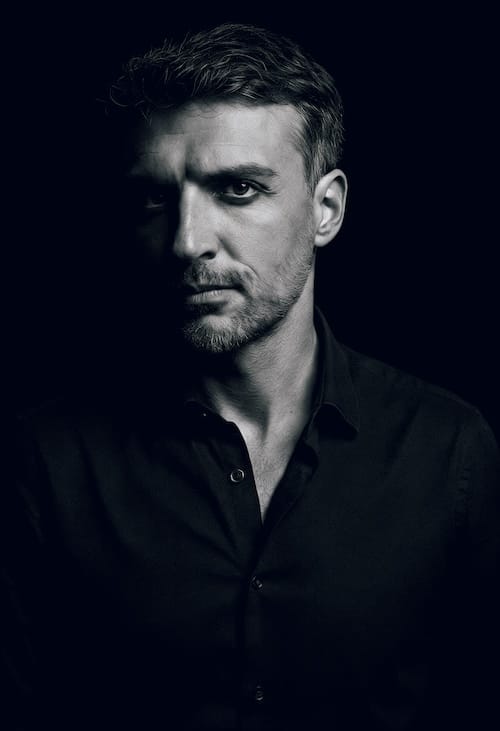
Watch Hall’s face during conversations where Dexter is supposed to feel something. Birthdays. Funerals. Moments with Rita where a reciprocal expression would be normal. Hall keeps his face still. The muscles around his eyes don’t engage. His mouth stays neutral. The forehead does nothing. Hall is playing a character who learned, at a cellular level, that facial expression is dangerous.
The michael c hall blank stare reads to casual viewers as coldness. It looks like psychopathy, which is what the show wants you to think. Hall is playing something more specific than that. He’s playing a man whose face was trained out of him.
Facial mirroring is one of the earliest social behaviors in human development. Infants mirror the expressions of their caregivers within hours of birth. The mechanism is automatic. A baby sees a smile, the baby’s face moves toward a smile. The mechanism runs deeper than imitation. Mirroring is the foundation of emotional connection, the first language a person learns before words exist. When that mirroring gets disrupted, when the caregiver’s face is absent or threatening or simply not there to mirror, the child’s system adapts. The adaptation looks like stillness.
I’ve sat across from adults who present with this pattern. Their faces are composed. They look calm, controlled, sometimes pleasant. And their facial muscles don’t respond to other people’s expressions the way most faces do. A joke lands and the mouth produces a smile, a beat late, because the smile is manufactured rather than mirrored. Sadness from a friend produces a slight head tilt and an appropriate verbal response, but the face itself stays flat. The muscles that should fire in sympathetic response don’t fire. They were never properly calibrated, or they were calibrated and then shut down because the environment punished expression.
Dexter Morgan’s backstory gives Hall the clinical basis for this choice. A three-year-old boy sits in his mother’s blood for two days. Whatever mirroring circuits that child had built in his first three years get buried under a dissociative response that severe. Then Harry Morgan adopts him and, instead of addressing the trauma, builds the Code. Harry teaches Dexter to fake normalcy. To perform the expressions other people expect. To study human behavior like a foreign language and reproduce it on command.
Hall plays the result of that training with surgical precision. Dexter’s face doesn’t express. Dexter’s face performs expression. And Hall makes the difference visible.
The gap between expression and performance is where Hall does his best work. There are moments across all eight seasons where something cracks through the stillness, and those moments are the most accurate thing in the show. Dexter sees Debra in danger and Hall’s face moves before the character can catch it. The eyebrows contract. The jaw shifts forward. The expression lasts a fraction of a second before the blank mask resets. Hall plays these breaks as involuntary, because that’s what they are. The emotional system underneath the trained stillness is still functioning. It’s been buried under years of Harry’s conditioning, but it’s alive, and it occasionally escapes the suppression for a single frame.
In clinical work, these breaks are diagnostic gold. A client with extensive emotional suppression will maintain composure for an entire session and then something small will trigger a microexpression that contradicts everything they’ve been presenting. A flash of anger during a discussion about a parent. A tightening around the eyes when a partner’s name comes up. The break confirms that the emotional system exists underneath the suppression. The suppression is a learned overlay. The feeling underneath is intact.
Hall calibrates these breaks to the relationship. Around Rita, the breaks are more frequent and more visible, because Dexter’s attachment to Rita is genuine even if Dexter can’t name it. Around colleagues at Miami Metro, the mask is almost total. Around Debra, the breaks are constant and Hall plays them with a quality of confusion, as if Dexter’s face is doing things his internal model can’t account for. Dexter doesn’t understand why his face moves when Debra is in trouble. He has no framework for involuntary emotional response because Harry never gave him one. Harry gave him a manual for faking expression, and the manual doesn’t cover what happens when real feeling overrides the fake.
The parallel that keeps pulling at me is Caleb from The Marksman. Caleb was raised as a weapon by a criminal clan from age eleven. His narration is spare and observational. Caleb reads people through competence and utility. He doesn’t name feelings. When emotion surfaces in Caleb, it comes through the body instead. His chest gets heavier. A finger gives a small jump. The face stays flat because Caleb’s environment, like Dexter’s, punished visible feeling. Both men learned that a readable face is a liability.
Hall’s blank stare and Caleb’s flat narration are the same adaptation running through different channels. Hall suppresses the face. Caleb suppresses the voice. In both cases, the suppression was installed by an authority figure who needed the person to function as a tool rather than a full human being. Harry needed Dexter to pass as normal while executing kills. Caleb’s clan needed him to perform under pressure without emotional interference. Both systems produced the same result: a person who learned to override the body’s natural signaling because the people who raised them treated visible emotion as a failure condition.
The moments when something leaks through are the most revealing in both cases. Hall lets Dexter’s face crack for half a second before the mask returns. Caleb’s narration will land on a physical sensation, a heaviness or a twitch, and then move on without comment. The leak is the proof that suppression is a behavior. It was installed, and it can be disrupted. Something underneath is still generating the signal. The training just reroutes where it goes.
Hall made a choice that most actors playing killers don’t make. Most actors playing cold characters go rigid. They hold the body tight, lock the jaw, stare hard. That reads as menace. Hall went the other direction. He made Dexter’s face soft. Relaxed. Almost pleasant. The blankness isn’t tense. It’s settled. And that settled quality is what makes it so accurate, because genuine long-term emotional suppression doesn’t look like effort. It looks like a person whose face has simply stopped participating in the conversation. The muscles aren’t being held. They’ve been released from duty.
I’ve seen that face in my office. The client sits across from me and their features are arranged in a pleasant, neutral configuration that doesn’t change when the content of the conversation shifts. Good news, bad news, painful memory, funny story. The face stays the same. The face has been disconnected from the emotional processing system for so long that it doesn’t receive the signal anymore. Reconnecting it takes years and it starts with the person noticing, for the first time, that their face isn’t doing anything. Most of them have no idea until someone points it out.
Hall played eight seasons of a man who never notices. Dexter performs expressions the way a person performs a second language, with deliberate effort and occasional errors that native speakers would never make. The performance is competent enough to pass. It’s never natural. And Hall never lets it become natural, even in the later seasons where Dexter is supposedly growing and changing. The face stays trained. The mask stays soft. And the breaks remain involuntary and brief.
That restraint is the whole performance. Every other choice Hall makes, the voice, the walk, the careful body language around kill rooms, all of it follows from one foundational decision: Dexter Morgan’s face was broken at three years old and Harry Morgan sealed the break instead of healing it. Hall plays the seal. And he plays it so well that most viewers mistake it for the man.
Common questions
Why does Dexter Morgan have a blank stare?
Dexter’s face was trained out of him. He learned at a cellular level that facial expression is dangerous, first through a trauma at age three and then through Harry’s conditioning to fake normalcy. So his face does not express. It performs expression on command, which Hall makes visible as a manufactured rather than mirrored response.
Is the blank stare a sign of psychopathy?
No, and that is the point. The blankness reads as psychopathy to casual viewers, but Hall is playing learned emotional suppression. The emotional system underneath is still functioning. It surfaces in involuntary microexpressions that a psychopath’s flat affect would not produce.
What is facial mirroring and why does it matter for Dexter?
Facial mirroring is the automatic way infants copy a caregiver’s expressions within hours of birth. It is the foundation of emotional connection, the first language learned before words. When that mirroring is disrupted by an absent or threatening caregiver, the child adapts into stillness, which is exactly the face Hall built.
Why does Hall play Dexter’s face as soft instead of tense?
Because genuine long-term suppression does not look like effort. Most actors playing cold characters go rigid and lock the jaw, which reads as menace. Hall made Dexter’s face settled and almost pleasant, the look of muscles released from duty, which is what real disconnection looks like.