Why Gabriel Cohen Is More Than Just Paranoid.
Gabriel Cohen speaks eleven languages and reads micro-expressions. A clinician explains why Mossad training and clinical paranoia fuse into something far more dangerous than either one alone.
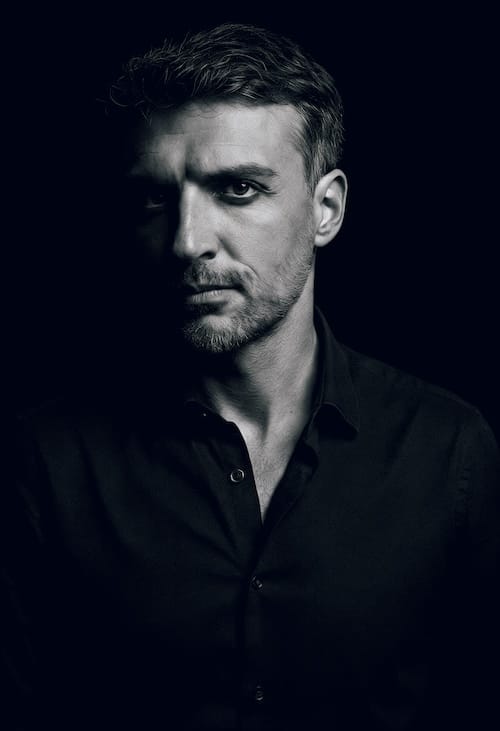
The short version
Gabriel Cohen is more than just paranoid because his suspicion is a trained intelligence skill running with no off switch, not a disorder that distorts reality. Gabriel was a Mossad archivist, the analyst whose job was to cross-reference everything and resolve every ambiguity into a confirmed or denied data point. That cognitive style made him valuable inside the service. Sent back to civilian life, the processor kept running, turning every cafe into an intelligence problem and every person into a potential source. His paranoia runs on evidence and data, which is what makes it so hard to treat. His mind is not damaged. It is working exactly as it was trained to in a world that no longer calls for it.
- Gabriel was an archivist, not a field agent. He was trained to see patterns others missed, not to act.
- His paranoia is the organized kind. It runs on real observation, mapping exits and reading micro-expressions automatically the way lungs breathe.
- Eleven languages is a clinical indicator, not a flourish. It is the same drive to decode and store every system, applied to speech.
- On October 7 he gets recalled and the instrument becomes useful again, which is the bind. He was built for a world that only exists intermittently.
Gabriel Cohen is the most dangerous kind of person to sit across from in a clinical setting. He reads you faster than you read him. He speaks eleven languages, picks up micro-expressions in real time, and has spent decades inside intelligence systems that rewarded exactly the kind of pattern recognition that, outside those systems, looks like paranoia. The gabriel cohen mossad psychology question people keep circling is the wrong question. The right one is simpler. What happens when a skill set built for espionage becomes the only way a person knows how to process reality?
Gabriel was an archivist for Mossad. Not a field agent. Not a handler. An archivist. He organized information, cross-referenced intelligence, identified connections between data points that other analysts missed. This is important because it tells you what Gabriel’s mind was trained to do. Field agents are trained to act. Archivists are trained to see. Gabriel’s entire professional value was his ability to detect patterns others couldn’t, to find the signal hiding inside enormous quantities of noise. Mossad didn’t hire Gabriel because he was paranoid. Mossad hired Gabriel because his particular cognitive style, the relentless cross-referencing, the inability to let a loose thread stay loose, the compulsive need to resolve every ambiguity into a confirmed or denied data point, made him an extraordinary intelligence processor.
Then they sent him back into civilian life and expected the processor to shut down.
It didn’t.
This is where the clinical picture becomes specific. Gabriel’s paranoia is not the disorganized kind. He doesn’t see threats in shadows or hear conspiracies in static. Gabriel’s paranoia runs on evidence. It runs on data. It runs on an analytical habit that was sharpened over years of professional use and that cannot distinguish between a world where the analysis is required and a world where it is not. Gabriel walks into a cafe in A Day You Won’t Forget and within seconds he has mapped the exits, identified the people who arrived alone, noted the man whose coffee order doesn’t match his body language, catalogued the weight distribution of the woman standing near the counter. He does this automatically. The way a retired accountant might glance at a restaurant receipt and spot the tax error before anyone else has looked at the total.
The difference is that the accountant’s reflex is benign. Gabriel’s reflex generates threat assessments. Every room he enters becomes an intelligence problem. Every person he meets becomes a potential source, a potential asset, a potential risk. His brain does this the way your lungs breathe. There is no off switch. There was never supposed to be an off switch. The training worked.
Arthur Penhaligon in Arthur 9 builds a numerological system to monitor his cul-de-sac. Arthur’s vigilance is contained. It lives in a ledger. It has rules and categories and thresholds. Arthur can sit by his window and run the numbers and feel something close to control, because the system mediates between Arthur and the threat. Gabriel has no mediating system. Gabriel is the system. The analysis isn’t something he does. It is something he is. Arthur can close the ledger. Gabriel cannot close his own mind.
I’ve worked with former intelligence professionals. Not many, and I won’t pretend the sample is large. What I can say is that the ones who struggle most after leaving the service are not the ones who saw combat or ran dangerous operations. Those people have visible trauma. They get flagged. They get referred. The ones who struggle most are the analysts. The pattern-matchers. The people whose job was to think in a particular way for so long that the thinking became structural. You can treat a flashback. You can work with a phobic response. Working with a person whose entire way of thinking has been shaped by decades of professional suspicion is a different clinical problem. The thinking isn’t damaged. It is functioning exactly as it was trained to. The person is suffering because the training is perfect and the context has changed.
Gabriel speaks eleven languages. This detail reads like a character flourish, a signal that Gabriel is brilliant. It is that, but it is also a clinical indicator. A person who acquires eleven languages is a person who cannot stop decoding. Language acquisition at that level is an expression of the same drive that made Gabriel a gifted archivist. He takes in communication, breaks it down into components, maps the structure, identifies the patterns, stores the system. He does this with Arabic and Farsi and German and Portuguese the same way he does it with human behavior. He decodes people the way he decodes rooms. He maps the interval between a waiter’s greeting and the placement of a glass on a table, because interval data was meaningful in his professional life and his brain never received the memo that it stopped being meaningful.
The morning of October 7, Gabriel gets recalled. The country needs his mind again. The processor that wouldn’t shut down in peacetime is suddenly the exact tool the situation requires. Gabriel’s paranoia, his obsessive surveillance, his inability to let a single detail pass unexamined, all of it becomes useful again in an instant. This is the bind that makes Gabriel more than a clinical case study. He isn’t broken. He is a precision instrument that was built for a world that only exists intermittently. In the gaps between those emergencies, the instrument keeps running, and the person carrying it pays for every second of idle operation.
Gabriel Cohen’s mind works. It works the way it was trained to work. The question that makes him worth studying, the one that sits at the center of his clinical picture, is whether a mind that was optimized for threat detection can ever learn to exist in a world where most of what it detects isn’t a threat at all, or whether the optimization itself is permanent, a one-way renovation that left no room for the person who lived there before the construction began.
Common questions
Is Gabriel Cohen actually paranoid or is something else going on?
He is more than paranoid. His suspicion is a trained intelligence skill, the archivist’s habit of resolving every ambiguity into data, running long after the job that needed it ended. Clinical paranoia runs on shadows. Gabriel’s runs on real observation, which is what makes it so much harder to argue with.
What does Gabriel’s Mossad background have to do with his psychology?
Everything. As an archivist he was rewarded for constant cross-referencing and the inability to leave a loose thread alone. The service trained the exact cognitive style that, outside the service, looks like illness. They built the processor, then expected it to shut down when he went home. It did not.
Why does it matter that Gabriel speaks eleven languages?
It is a clinical indicator. Acquiring that many languages is the same compulsion to decode, break down and store a system, pointed at speech. He reads grammar the way he reads a room, and neither process has an off switch.
How is Gabriel different from Arthur in Arthur 9?
Arthur’s vigilance lives in a ledger with rules and thresholds, so the system mediates between him and the threat and he can close it. Gabriel has no mediating system. He is the system. Arthur can shut the ledger. Gabriel cannot shut his own mind.